
Forests cover one-third of the Earth’s landmass, performing vital functions around the world. Around 1.6 billion people – including more than 2,000 indigenous cultures – depend on forests for their livelihoods, medicines, fuel, food and shelter.
Forests are the most biologically diverse ecosystems on land, home to more than 80% of the terrestrial species of animals, plants and insects. Yet, despite all of these priceless ecological, economic, social and health benefits, global deforestation continues at an alarming rate.
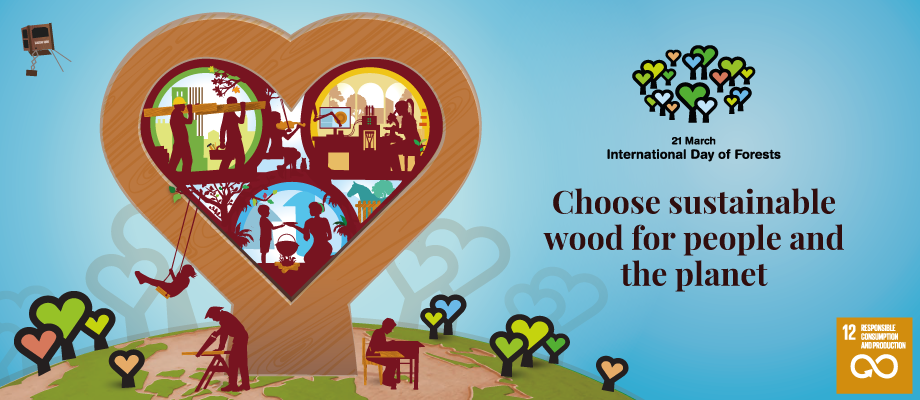
The United Nations General Assembly proclaimed 21 March the International Day of Forests in 2012. The Day celebrates and raises awareness of the importance of all types of forests. On each International Day of Forests, countries are encouraged to undertake local, national and international efforts to organize activities involving forests and trees, such as tree-planting campaigns.
2022 Theme
The theme for 2022 is “Forests and sustainable production and consumption”. When we drink a glass of water, write in a notebook, take medicine for fever or build a house, we do not always make the connection with forests. And yet, these and many other aspects of our lives are linked to forests in one way or another.
Forest sustainable management and their use of resources are key to combating climate change and contributing to the prosperity and well-being of current and future generations. Forests also play a crucial role in poverty alleviation and in the achievement of the Sustainable Development Goals (SDGs). Yet despite all these priceless ecological, economic, social and health benefits, global deforestation continues at an alarming rate.
Wood helps to provide bacteria-free food and water in many kitchens, build countless furniture and utensils, replace materials as harmful as plastic, create new fibres for our clothes and, through technology, be part of the fields of medicine or the space race. It is vital to consume and produce wood in a more environmentally friendly way for the planet and its inhabitants. Let’s protect this easily renewable resource with sustainable management of forests.
According to UN-REDD, forests are home to about 80% of the world’s terrestrial biodiversity and an estimated 1.6 billion people use forests for all or part of their livelihoods such as food, shelter, energy and income. Millions, including people in cities, depend on forest resources for clean air and fresh water.
During the day, trees absorb carbon dioxide for photosynthesis and give out oxygen, the air that we breathe. The carbon in forests exceeds the amount of carbon currently in the atmosphere. Forests and forest soils store more than one trillion tonnes of carbon.
Hence, forests play a crucial role in fighting catastrophic climate change by absorbing and storing massive amounts of CO2. In addition, trees could reduce temperatures in cities up to 8°C, lowering use of air conditioning and related emissions by up to 40%. But as we cut them down, oftentimes to make space for agriculture, they lose their ability to regulate the global climate.
During heavy rains, trees reduce the risk of flooding. Experts say that woodland acts as a barrier to floodwater, while trees also prevent soil erosion, reducing sediment going into rivers and increasing water absorption into the ground. Forests can also retain excess rainwater, prevent extreme run-offs and reduce the damage of flooding. They can also help mitigate the effects of droughts by releasing water in the dry season, forests can also help provide clean water and mitigate the effects of droughts.
Furthermore, more than a quarter of modern medicines, worth an estimated US$ 108 billion a year, originate from tropical forest plants.